
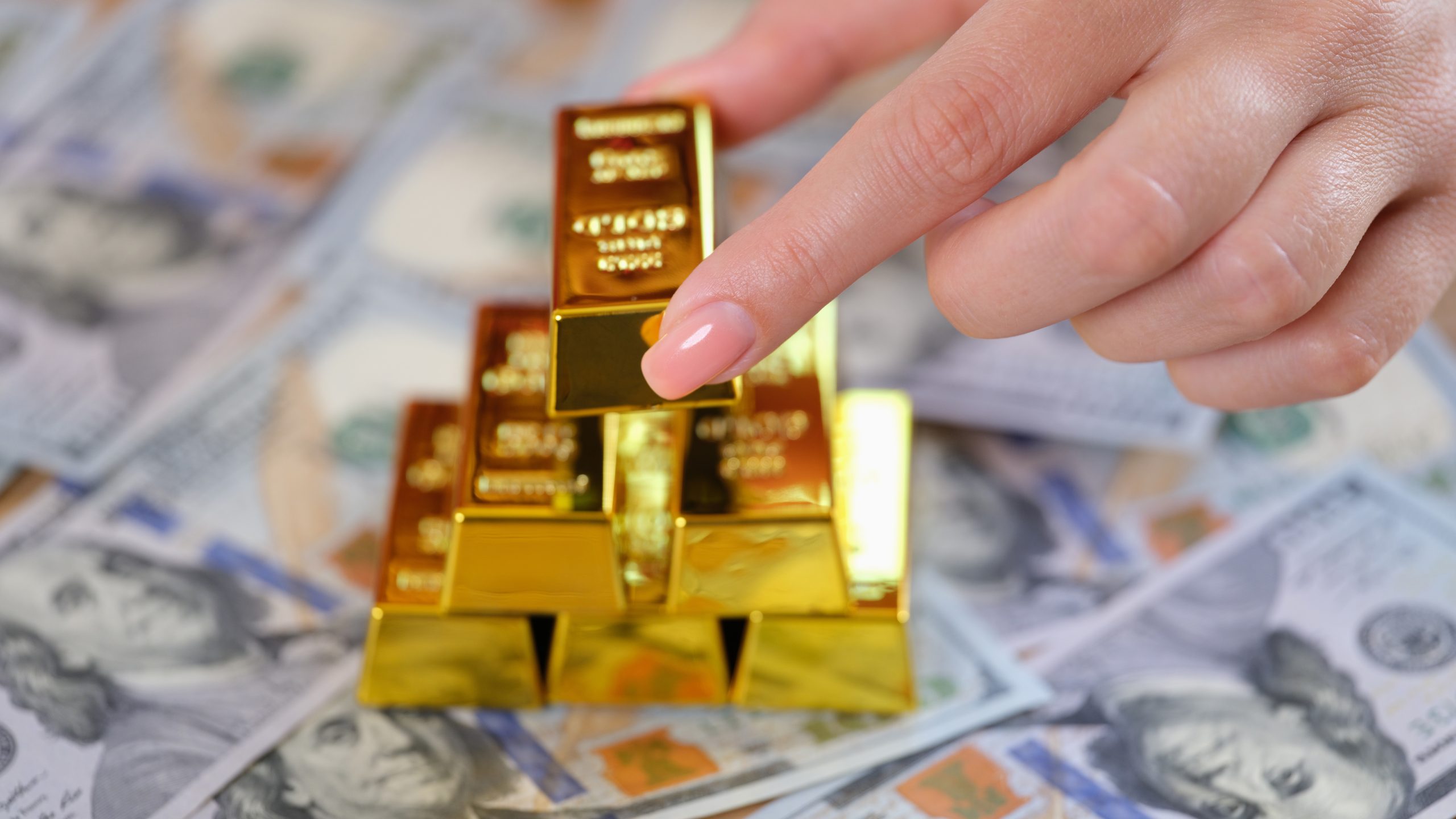
Gold continues to rise: When politics moves the market
Gold is currently doing exactly what one would expect from a "crisis asset": it is reacting quickly, consistently, and without lengthy discussion. At the start of the week, the price of gold reached new all-time highs in Asian trading, at times approaching the US$4,700 per ounce mark. The trigger was not a single piece of economic data, but a political headline that fits perfectly into the current market environment.
This is because the gold market is currently driven less by traditional fundamentals than by uncertainty. And there is more than enough of that at the moment.
New customs threats, old patterns
The latest impetus came from the US. President Donald Trump introduced new tariffs against several European countries in connection with political tensions surrounding Greenland. Whether these measures will actually be implemented is secondary for now. What matters is their impact on the markets.
Trade policy threats immediately increase nervousness:
- They challenge existing supply chains
- They are fueling fears of inflation and growth
- They increase the likelihood of political escalation.
And it is precisely in this environment that investors reflexively turn to gold. Not out of euphoria, but out of a desire for security.
Why gold is reacting so quickly at the moment
The current gold market is extremely sensitive to political developments. This is partly due to several trends occurring simultaneously:
- Geopolitical risks are increasingly perceived as permanent
- Monetary policy uncertainty remains high
- Confidence in political stability is limited
Gold acts as a kind of insurance in this mix. The more political unrest there is, the less willing investors are to rely exclusively on traditional risk assets.
What's more, the recent rally is building on existing demand. Gold is therefore not emerging from a period of weakness, but from a position of strength.
Interest rate cuts in the background: a silent amplifier
While political headlines are causing short-term fluctuations, monetary policy is having more of a background effect. Expectations that the US Federal Reserve could initiate interest rate cuts later in the year remain. Softer economic data and more moderate inflation signals support this assessment.
This is an ideal environment for gold:
- Falling interest rates reduce opportunity costs
- Real yields come under pressure
- Hedging assets are becoming more attractive
Politics provides the spark, monetary policy keeps the trend alive.
Silver is keeping pace and reinforcing the movement
It is striking that silver is not only accompanying the movement, but in some cases even accelerating it. The price of silver also jumped to new record levels, underscoring the broad momentum in the precious metals sector.
Silver plays a dual role here:
- As a precious metal, it benefits from risk aversion.
- As an industrial metal, it reacts to supply and demand signals.
This combination regularly causes greater fluctuations than with gold. For the market as a whole, this means that when silver performs strongly, attention often shifts to gold as well.
What investors can take away from this
The current rise in the price of gold is not an isolated event. It fits into an overall picture characterized by uncertainty and political fragmentation. Several factors are at work simultaneously:
- geopolitical tensions
- trade policy risks
- interest rate cut speculation
- increasing demand for protection
As long as this situation persists, gold is likely to remain susceptible to further upward movements. This does not rule out setbacks—quite the contrary. However, corrections have so far been interpreted as a breather rather than a break in the trend.
Bottom line
Gold is currently demonstrating why it repeatedly comes into focus in uncertain times. Not because everything is going perfectly, but precisely because it is not. Political risks, monetary policy expectations, and a nervous market combine to create an environment in which the precious metal remains in demand.
For investors, this means that gold is less of a short-term trade and more a reflection of the global situation. And viewed objectively, this situation remains anything but calm.